

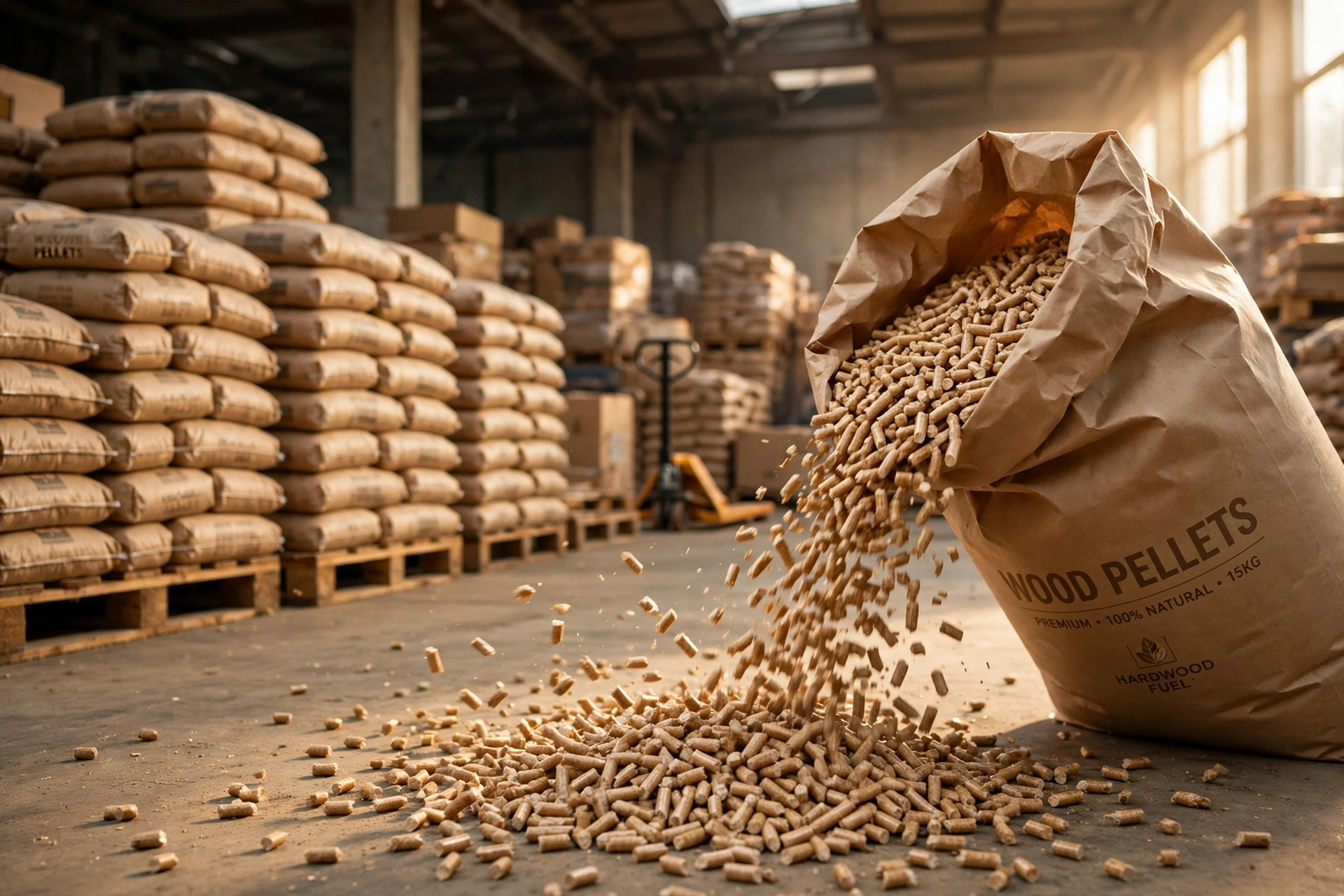
Every winter, the same problem returns for pellet users. Local stock runs low just when heating demand peaks, and prices climb with the cold. Buyers then start looking beyond their own borders, and that cross-border purchase of wood pellet fuel is what people mean by importpellet. It is not a brand, a grade, or a special licence. It is simply the business of sourcing pellets in one country and bringing them into another, with all the paperwork, freight, and quality control that involves.
Pellets themselves are simple. Sawdust and clean wood waste are dried, ground, and pressed into short, dense cylinders, usually six or eight millimetres wide. Because they are uniform and dry, they burn steadily in stoves, boilers, and power plants. The importing side is where most of the work sits.
What Importpellet Actually Means
In practice, importpellet covers everything between finding an overseas mill and stacking the finished bags in your own warehouse. The pellet does not change when it crosses a border. What changes is everything around it: the contract, the currency, the shipping route, the customs file, and who carries the risk if something goes wrong on the way.
Wood is a familiar material in daily life. The same timber that ends up in furniture or in a timber roof frame can, as sawdust and offcuts, be pressed into fuel. Pellets turn a low-value residue into a standardised energy product that ships and stores well, which is why an international market for them exists.
Why Buyers Import Pellets
Demand is the first reason. As households, heating companies, and power stations move away from coal, oil, and gas, pellet consumption keeps rising, and local sawmills cannot always keep up. A country may produce plenty in summer and still run short in January.
Price is the second reason. Regions with large forestry industries can often land pellets in a foreign port for less than the local price elsewhere. The third reason is security of supply: import contracts protect buyers against one weak local harvest or one mill breakdown. Burning biomass in this form also helps buyers meet renewable energy targets.
Pellet Types and Grades Worth Knowing
Not every pellet suits every appliance, so grade comes before price. In Europe, the ENplus scheme is the common language. Grade A1 is the premium class for home stoves and small boilers, with the lowest ash. Grade A2 allows slightly more ash and suits larger boilers, and Grade B is aimed at industrial users. North America uses the PFI standards, and the international ISO 17225-2 standard sits behind both systems.
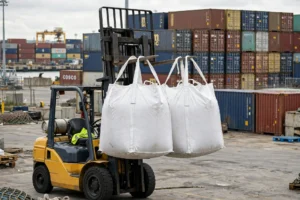
Pellets also arrive in different formats. Households usually buy 15-kilogram bags on pallets, commercial users take one-tonne big bags, and power plants order bulk cargo by the shipload. Each format changes the handling and packaging cost, so fix the format in the contract. Whatever grade and format you choose, an importpellet order should name both in writing, because most disputes start with a vague specification.
Quality Checks Before You Pay
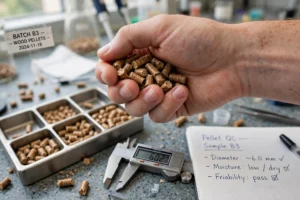
Quality is where importpellet deals are won or lost, because a cheap container of bad pellets is expensive in the end. Wet pellets crumble, dusty pellets jam augers, and high-ash pellets fill a stove with clinker. Before any serious payment, ask the supplier for a valid certification ID and a recent lab test report, and check both.
The key numbers are easy to compare. For the premium A1 grade, moisture should be 10 percent or less, ash 0.7 percent or less, durability at least 97.5 percent, and calorific value roughly 16.5 to 19 megajoules per kilogram. Order a sample first, burn it in your own appliance, and only then discuss a full shipment. Serious exporters expect this routine.
Documents Customs Will Ask For
Most delays in importpellet trade are paperwork delays, not fuel problems. Wood pellets usually move under HS code 4401, and customs officers want a file that matches the cargo exactly. Prepare the commercial invoice, the sales contract, and the packing list first, then add the bill of lading, a certificate of origin, and the lab report from loading.
Many countries also ask for a phytosanitary certificate, because pellets are a wood product, and some require a fumigation certificate as well. If your country needs an import licence, arrange it before the vessel sails, not while it waits outside the port. A good customs broker earns his fee by checking the file while corrections are still cheap.
How the Shipping Process Runs
Every importpellet shipment runs in a set order. You agree the specification, quantity, price, and delivery term with the supplier. Terms such as FOB and CIF decide who pays for freight and insurance and where the risk passes from seller to buyer, so read them properly. Production and bagging follow, then an inspection at loading if you arranged one.
After that comes the voyage, port handling, customs clearance, and final delivery. Larger buyers often track these stages in a project management tool so nothing depends on one person’s inbox. A first order commonly takes several weeks, and winter orders take longer.
What the Landed Cost Includes
The mill price is only the starting point. The figure that decides whether an importpellet deal works is the landed cost: the full price of the pellets standing in your warehouse. Build it up line by line: product price per tonne, freight and insurance, port and document charges, duty and taxes where they apply, and local delivery and storage.
Exchange rates belong in this calculation too, because a contract in another currency can quietly change price while the cargo is at sea. Compare suppliers on landed cost per tonne at the same grade, never on the headline mill price.
Storage and Handling After Arrival
Good pellets can be ruined in a bad warehouse. Bags must stay dry, off the floor, and away from roof leaks, because pellets absorb moisture and swell back into sawdust. Rotate stock so the oldest cargo sells first, and keep the area clean of dust, which is a fire and health risk in quantity.
Handle bags gently. Every extra loading breaks more pellets into fines, and fines are what customers complain about.
Common Mistakes New Importers Make
The classic importpellet mistake is buying on price alone and discovering the grade only when the container opens. The second is skipping the sample and the lab report because the supplier sounded friendly. The third is ordering a grade your customers’ stoves cannot handle, then blaming the fuel.
New buyers also forget the calendar. Ordering in November means competing with the whole heating market for vessels and trucks. Many also underestimate storage: the cargo arrives, the warehouse is full, and the demurrage bill starts growing. Each error is avoidable with a checklist and patience.
Final Words
Done properly, importpellet is a reliable way to keep stoves burning and shelves stocked when local supply falls short. Choose the grade first, verify the supplier and the fuel with documents and a sample, build the landed cost honestly, and prepare your customs file before the cargo moves. Buyers who treat importing as a process, rather than one cheap purchase, are the ones still trading profitably years later.
