

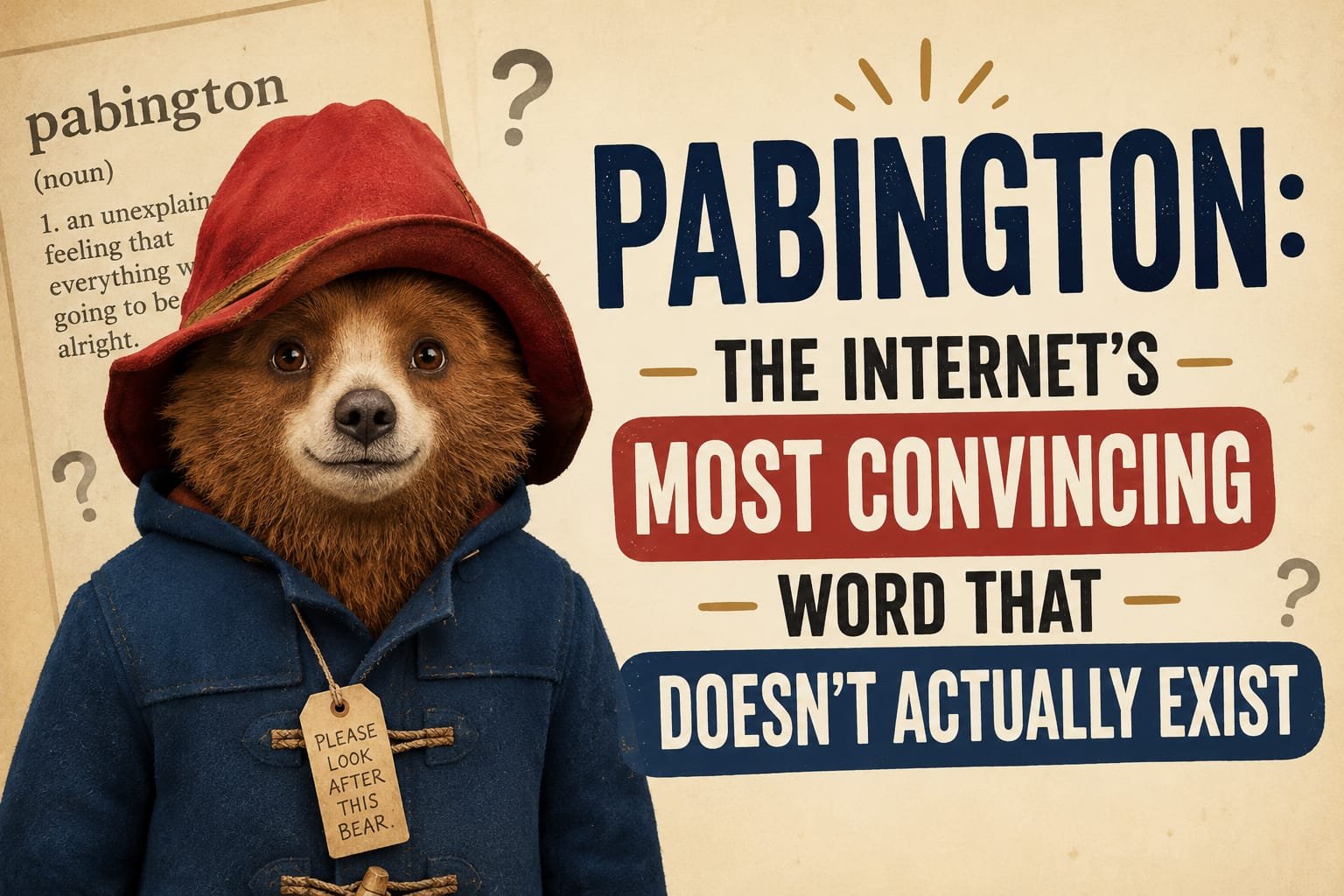
Have you ever Googled a word and walked away more confused than when you started? That’s exactly what happens to thousands of people every day when they search for pabington.
It sounds like a real place. It reads like a name you’ve heard before. Your brain immediately fills in a mental image — maybe a quiet English village, cobblestone streets, a church with stained glass windows. But here’s the thing: Pabington, as a fixed, documented, officially recognized place or concept, simply doesn’t exist.
And yet? It’s everywhere.
As someone who has spent over a decade tracking digital trends, emerging keywords, and the weird, wonderful ways language evolves online, Pabington is one of the most fascinating case studies I’ve come across in years. In this post, I’m going to pull back the curtain on what Pabington actually is, why it matters in today’s digital culture, how content creators and brand builders can use it strategically, and what common mistakes you absolutely need to avoid.
Let’s dig in.
What Is Pabington? A Clear Explanation for Curious Readers
At its core, Pabington is what linguists and digital culture researchers would call an internet-born term — a word that emerged and gained traction online, not through formal language development, but through repetition, curiosity, and collective use.
Think of it like a rumour that became a legend. Nobody can point to the original source. Nobody knows exactly who said it first. But enough people repeated it that it now carries a kind of cultural weight.
Linguistically, the word is clever — even if unintentionally so. The “-ington” suffix is deeply embedded in English place-name tradition. Think Paddington, Kensington, Wilmington, Warrington. These are real places with centuries of history. The suffix typically signals a settlement or town connected to a person or family. So when your brain reads “Pabington,” it instantly pattern-matches to something legitimate.
That’s the psychological hook.
One widely discussed theory is that Pabington originated as a typo or autocorrect variation of “Paddington” — and instead of dying quietly, the variation stuck. Search engines and content platforms picked it up, algorithms amplified it, and writers began using it as a fictional setting or creative concept, which only deepened the mystery.
Today, Pabington exists in several distinct ways:
– As a fictional place in creative writing, blog posts, and storytelling
– As a unique username or online handle with a polished, memorable feel
– As a brand concept or project name for creators and businesses
– As a digital identity that individuals use to express a particular aesthetic or persona
It’s not a place. It’s not a person. It’s an idea — and in digital culture, that’s often more powerful than either.
Benefits and Use Cases: Who Should Actually Care About Pabington?
Okay, so it’s a made-up internet term. Why should you care? Fair question. Here’s where it gets interesting from a practical standpoint.
For Content Creators and Bloggers
Pabington is a masterclass in curiosity-driven content. The term generates clicks because people genuinely don’t know what it is. That confusion is an asset. If you’re a content creator building around niche topics, emerging trends, or “what is this?” content formats, Pabington-style keywords are gold. They’re low competition, high curiosity, and primed for featured snippets because everyone wants a clean, direct answer.
For Brand Builders and Entrepreneurs
Because Pabington is not widely claimed or trademarked, it represents a genuinely available namespace. A name that sounds refined, slightly whimsical, and distinctly memorable — without any negative associations — is harder to find than you’d think. If you’re building a personal brand, launching a boutique business, or creating a creative project, Pabington-style names offer real commercial potential.
For Digital Storytellers and World-Builders
Writers love Pabington because it gives them a fictional setting that feels immediately believable. Drop “Pabington” into a story set in rural England and readers won’t blink. That cultural camouflage is useful.
Who Should Approach With Caution
If you’re in a field that depends on factual accuracy — journalism, academic writing, legal documentation — using terms like Pabington without clearly labelling them as fictional or invented can mislead readers. That’s not just an ethical concern; it’s a trust issue that can damage your credibility long-term.
Step-by-Step Guide: How to Use Pabington Effectively in Your Digital Strategy
Whether you’re a blogger, brand builder, or creative writer, here’s how to work with a term like Pabington strategically — without misleading your audience.
Step 1: Define Your Intent First
Before you use Pabington for anything, get crystal clear on your purpose. Are you writing a creative piece? Building a brand? Crafting a curiosity-driven blog post? Your intent shapes everything that follows.
Step 2: Be Transparent With Your Audience
If Pabington is fictional or conceptual in your content, say so — clearly. You don’t need to be heavy-handed about it, but a sentence like “Pabington, while not an official place on any map, has become a fascinating concept in digital culture” goes a long way toward preserving your credibility.
Step 3: Lean Into the Curiosity Factor
The biggest strength of a term like Pabington is that it makes people ask questions. Structure your content to answer those questions directly. Use clear H2s and H3s. Answer “what is it,” “why does it exist,” and “what can I do with it” in plain, confident language. This is exactly what Google’s featured snippet algorithm rewards.
Step 4: Build Consistent Brand Identity Around It
If you’re using Pabington as a username or brand name, be consistent across platforms. Lock down the handle on Instagram, Twitter/X, TikTok, and relevant forums simultaneously. A cohesive presence turns a quirky name into a recognizable identity.
Step 5: Create Content That Genuinely Adds Value
Don’t just write about Pabington to game a keyword. Create content that actually answers reader questions, tells a story, or solves a problem. Thin, lazy content around curiosity keywords gets clicks but kills bounce rates. Build something worth reading.
Step 6: Monitor Performance and Iterate
Use tools like Google Search Console, Ahrefs, or Semrush to track how your Pabington-related content performs over time. Curiosity keywords can spike fast and fade fast — stay on top of the data.
Tools, Comparisons & Recommendations for Working With Emerging Digital Terms
When building content or brand identity around emerging terms like Pabington, here’s what actually works in the real world.
For Keyword Research:
– Google Search Console (free) — See what queries bring people to your existing content
– Ahrefs (paid) — Deep competitor analysis and keyword tracking
– Semrush (paid) — Strong for content gap analysis and topic clusters
– Ubersuggest (freemium) — Good entry-level tool for bloggers on a budget
For Brand Name Research:
– Namecheap — Check domain availability instantly
– Namechk — Scan username availability across dozens of platforms at once
– USPTO Trademark Search — Always check trademark status before committing to a brand name
For Content Writing and SEO Optimization:
– Surfer SEO — Great for on-page optimization against top-ranking competitors
– Clearscope — Excellent for semantic keyword coverage and content grading
-Hemingway Editor — Free tool that keeps your writing punchy and readable
Expert Take: For curiosity-driven content around internet-born terms, I’ve personally had the best results combining Google Search Console data (to find what people are actually asking) with Clearscope (to ensure semantic depth). The combination consistently outperforms single-tool approaches.
Common Mistakes and How to Fix Them
In years of watching content around emerging digital terms succeed and fail, these are the mistakes I see most often.
Mistake 1: Writing as if Pabington is definitively real
It’s tempting to lean into the fiction and write about Pabington as if it’s a confirmed place with a verified history. Some content online does exactly this. The problem? Savvy readers will fact-check you, and when they find nothing, you lose trust permanently. *Fix: Be honest about the term’s ambiguous, internet-born nature while still writing engaging, useful content.*
Mistake 2: Thin content with no actual depth
Many posts about Pabington are 300 words of vague description that leave readers more confused than before. This tanks dwell time and damages rankings. *Fix: Answer the real questions — what it is, where it came from, what it means, and how to use it.*
Mistake 3: Ignoring the branding opportunity
Some creators discover Pabington, write a quick post, and move on. They miss the bigger picture: it’s an unclaimed, memorable, versatile name with genuine commercial potential. *Fix: If you’re drawn to the name for any creative or business project, move quickly — availability windows don’t stay open forever.*
Mistake 4: Keyword stuffing
Because the term is unusual, some writers overcorrect by hammering it into every sentence. It reads terribly and Google’s algorithms penalize it. *Fix: Use it naturally, in context, where it actually fits — just like you would with any other keyword.*
Mistake 5: No clear audience in minU
Content about Pabington that tries to speak to everyone ends up speaking to no one. *Fix: Define who you’re writing for — curious browsers, brand builders, creatives — and tailor your tone, depth, and CTAs accordingly.*
Conclusion: What Pabington Actually Teaches Us
Pabington is a strange little mirror held up to how the internet works. A word that means nothing officially, yet carries genuine cultural weight. A place that doesn’t exist on any map, yet feels completely real to thousands of readers. A name with no confirmed origin, yet one with real branding potential for the right person or project.
In many ways, that’s the whole story of digital culture in miniature.
What I find genuinely fascinating — after years of watching keywords, trends, and digital identities rise and fall — is that Pabington’s power comes entirely from collective human curiosity. Nobody manufactured it. Nobody ran a campaign for it. People just started asking questions, and the internet did what it always does: it built an answer, even when no definitive answer existed.
If you’re a content creator, that’s the lesson. Curiosity is a traffic engine. Questions are content opportunities. And sometimes the most interesting keyword isn’t the most obvious one.
If you’re a brand builder, take note: unique, unclaimed, phonetically memorable names are out there. Pabington just happens to be one of the most interesting examples sitting in plain sight right now.
Try searching it yourself. See what you find. Then come back and tell me what you think it means to you — because in the world of internet-born terms, your interpretation is as valid as anyone else’s.
Frequently Asked Questions About Pabington
1. Is Pabington a real place?
No. There is no officially recognized, documented location called Pabington. It is an internet-born term that feels like a real place name due to its “-ington” suffix, which is common in English town names, but no verified geographic or historical record supports it as a real location.
2. Where did the word Pabington come from?
The exact origin is unclear. The most widely discussed theory is that it began as a typing variation or autocorrect error — possibly a misspelling of “Paddington” — and spread through online content, curiosity searches, and creative usage rather than through formal language development.
3. Can I use Pabington as a brand name or username?
Yes, and it’s actually a strong choice. The name is distinctive, memorable, and not widely claimed. Before using it commercially, always check domain availability and trademark databases to ensure you’re not infringing on any existing rights.
4. Why do so many blog posts describe Pabington as if it’s a real town?
This is a known pattern with internet-born curiosity keywords. Some content creators lean into the fiction because it’s more engaging. Others simply misunderstand the term’s nature. The result is a body of creative, often convincing content that deepens the word’s mystique — but should not be taken as factual.
5. Is Pabington good for SEO?
As a niche, low-competition curiosity keyword with growing search volume, Pabington has real SEO potential — particularly for featured snippet targeting. Content that directly and honestly answers “what is Pabington?” in a clear, structured format tends to perform well in search results.
6. What does Pabington mean in digital culture?
In digital culture, Pabington represents the phenomenon of internet-born language — terms that gain meaning through collective use rather than formal definition. It can mean a fictional setting, a creative identity, a personal brand handle, or simply a symbol of how language evolves in the internet age.
7. Is Pabington related to Paddington Bear?
Not officially. However, linguistically, the structural similarity to “Paddington” is likely part of why Pabington feels so immediately believable and familiar. The association is psychological, not historical.
8. Should I write content about Pabington?
If you’re a content creator interested in curiosity-driven keywords, digital culture, or niche SEO opportunities — yes, it’s worth exploring. Just be transparent about the term’s nature and focus on genuinely answering your reader’s questions rather than creating misleading content.
9. Will Pabington develop a fixed meaning over time?
Possibly. Words that gain enough online traction through consistent use can eventually settle into a recognized definition. Whether Pabington becomes primarily associated with creative branding, fictional settings, or something else entirely depends on how the broader internet community continues to use and shape it.
10. How do I stay updated on trends like Pabington?
Tools like Google Trends, Twitter/X trending topics, and emerging keyword trackers (Ahrefs, Semrush, Exploding Topics) are the best ways to catch curiosity-driven terms early — before the competition catches on.
